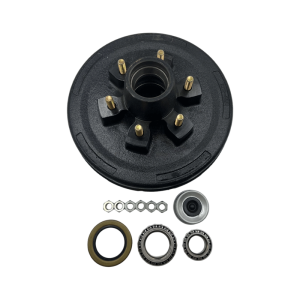
Trailer Brake Drum

Trailer Brake Drums: Know-How on Durability & Performance

Trailer brake drums are the core parts of your braking system—they team up with brake pads to stop everything from catering trucks and RVs to construction trailers. Trust me, you don’t want to skimp on this part: pick the wrong one, and you’ll deal with early wear, weak braking, or even blowouts or cracks—total disasters on the road. Let’s break this down like I would for a fellow hauler: materials, how they work, picking the right one, and keeping them in shape.

  1. What They Are & How They Actually Work

A brake drum is just a cast metal piece bolted right to the trailer axle—spins with the wheels. Most are made of gray iron, stuff like grade HT250, because it’s strong enough and grips the pads well. Braking’s just friction, but it’s critical—here’s how it goes step by step:

  1. Step on the brake, and your electric, mechanical, or hydraulic system pushes the brake shoes (what we call pads) tight against the inside of the drum;
  2. That rubbing slows the drum—and the wheels attached to it—until the trailer stops smoothly;
  3. Let off the brake, and springs pull the shoes back. Now the drum spins free, and you’re rolling again.
  1. The Make-or-Break Thing: Machining Precision

Good materials help, but how well the drum’s machined—especially if it lines up perfectly with the bearing housing (we call that concentricity)—is what really makes it last and work right. For light-duty trailers, the industry standard’s tight: roundness and concentricity have to be within 0.03mm. Here’s why that matters so much:

  • Good concentricity means no wobble when the drum spins—so bearings don’t wear lopsided, the trailer doesn’t shake, and you won’t feel that annoying “pulse” when braking;
  • Perfect inner diameter makes the shoes hit the drum evenly—no hot spots (which kill braking power fast) and no premature pad wear;
  • A smooth finish (Ra 1.6–3.2μm is what we look for) cuts down on squealing and keeps the grip consistent, even after lots of stops.
  1. 3 Common Materials: Pick What Fits Your Haul
  • Cast Iron (Most Popular): This is the go-to for light to medium loads (2,000–10,000 lbs). HT250 grade iron has a steady grip (friction rating 0.35–0.45) and handles heat well—perfect for RVs, catering trucks, and dry cargo vans. It’s tough enough and doesn’t break the bank; most fleet managers swear by it for daily runs.
  • Cast Steel (Heavy-Duty): Built for loads over 10,000 lbs—dump trailers, off-road haulers, that kind of work. High-tensile cast steel can take hits and handle constant heat up to 600°C, way better than iron. If you’re hauling heavy in construction or mining, this is your pick.
  • Alloy Composites: Usually aluminum with an iron liner—lightweight (30% lighter than iron) and cools fast. But it costs 3–5 times more than iron. Only worth it for fancy high-performance RVs or racing trailers; never a good call for regular cargo hauls.
  1. Drum vs. Disc Brakes: What’s Better for You?

It’s not about “better”—it’s about what you’re using the trailer for. Drums shine for heavy loads and messy jobs: their closed-up design keeps mud, salt, and grit out (huge for construction or coastal runs) and pulls harder when the trailer’s loaded. Maintenance is easy too—just tweak the shoe gap now and then and replace the pads. Discs cool faster, so they don’t lose power during lots of stops, and they feel smoother at high speeds—great for highway RVs. But they get banged up by debris easy。


Item #1

Contact Us